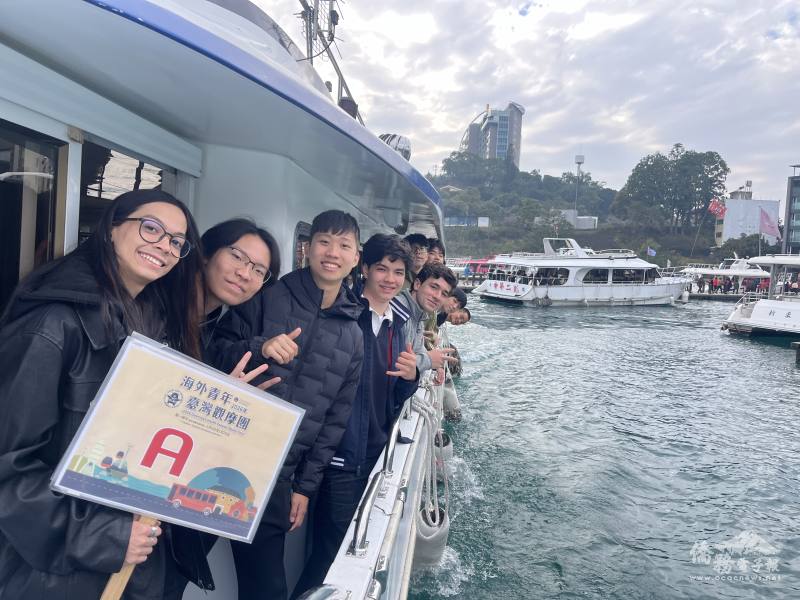
 Take in the breathtaking lake views aboard a yacht on Sun Moon Lake
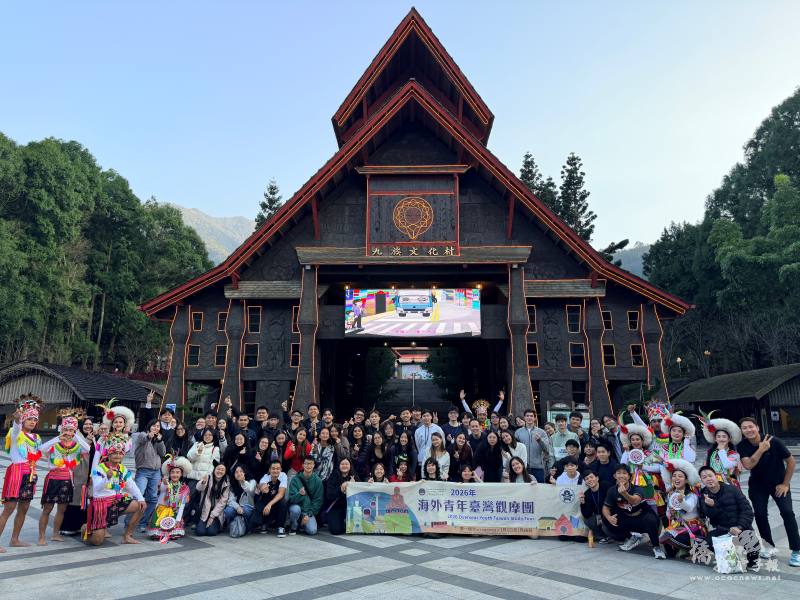 Learn about Taiwan’s Indigenous cultures at Formosan Aboriginal Culture Village
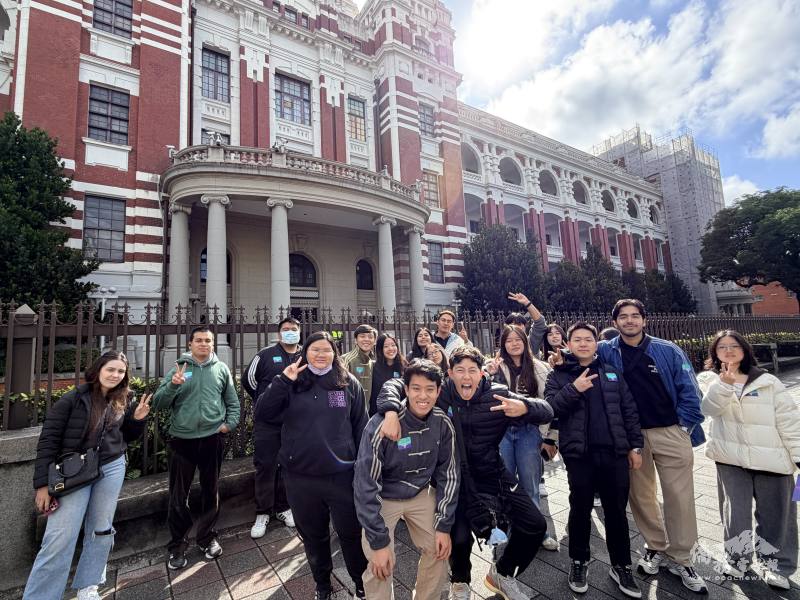 Visit the Presidential Office Building
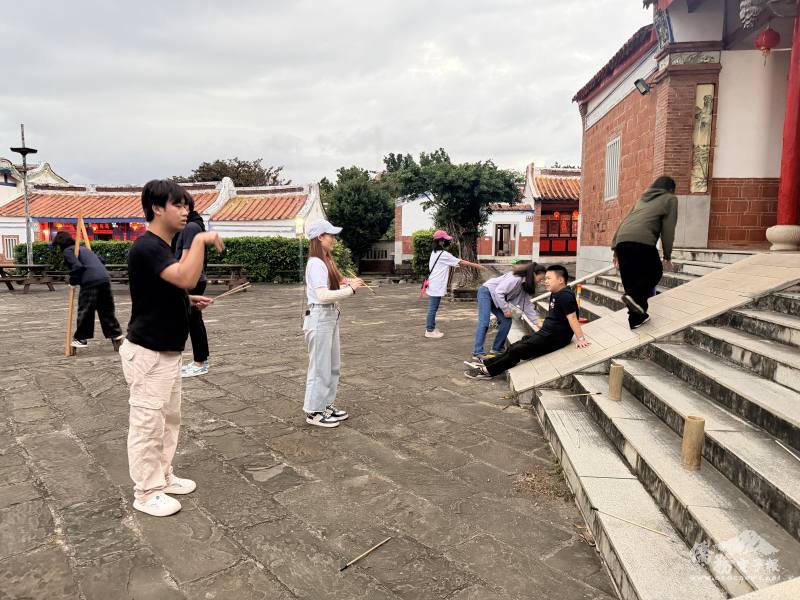 Experience traditional children’s games, including pitch-pot, ring toss, and stilt walking
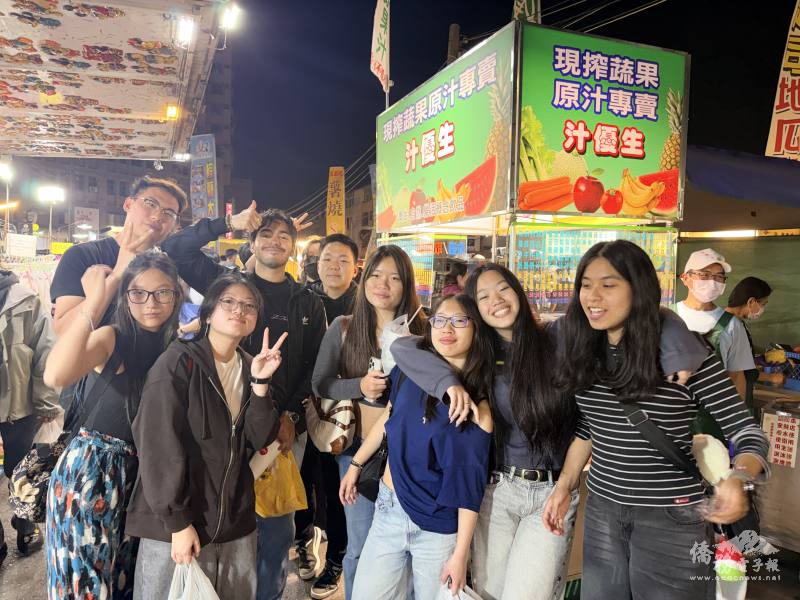 Explore local life in Taiwan and sample traditional snacks at a night market
From January 6 to January 26, 2026, the Overseas Community Affairs Council (OCAC) organized the first batch of the “2026 Overseas Youth Taiwan Study Tour” (Southern Hemisphere & Asia Batch 1), welcoming a total of 66 overseas youth from Brazil, Paraguay, Australia, and Argentina to Taiwan for a 21-day in-depth program of observation and cultural exchange. During this program period, many participants mentioned that international media coverage of renowned climber Alex Honnold’s free solo climb of Taipei 101 became a topic of interest among the group. Through such international events and shared discussions, participants expressed a stronger awareness of Taiwan’s openness as a city and its connections to the global community.
This batch marked the first time in recent years that the program was extended from the traditional 14 days to 21 days. The itinerary covered northern, central, and southern Taiwan, encompassing natural ecology, cultural experiences, industrial development, and urban exploration. The ecological and environmental exploration component highlighted Taiwan’s rich natural landscapes and environmental conservation efforts. Participants visited Gaomei Wetlands, Sun Moon Lake and the Xiangshan Visitor Center, Xitou Nature Education Area, Kenting Sheding Nature Park, Eluanbi Lighthouse, and the National Museum of Marine Biology and Aquarium, complemented by ecological documentary screenings.Jia-Lin Gu, a participant from Brazil, shared that she was impressed by how Taiwan preserves wetlands, forests, and marine ecosystems alongside urban development. She remarked that Taiwan demonstrates how economic growth and environmental protection can coexist, inspiring reflection on sustainability practices in her home country.
To deepen understanding of Taiwan’s multicultural society, participants visited the Formosan Aboriginal Culture Village, Liudui Hakka Cultural Park, the KIRI International Indigenous Cultural and Creative Park, the National Center for Traditional Arts in Yilan, and experienced hands-on activities such as traditional sachet-making workshops and folk toy. Through guided tours and hands-on experiences, participants learned about the cultural heritage and contemporary presence of Indigenous and Hakka communities in Taiwan.
Hugo Chen, a participant from Brazil, shared that unlike in his home country, where ethnic cultures are often less visible in mainstream society, Taiwan actively presents Indigenous and Hakka cultures in public spaces. He emphasized that multiculturalism in Taiwan is not merely a slogan, but a lived reality. Ting-Yu Hsu, a participant from Brazil, shared that in his home country, traditional culture is often confined to festivals or museums, whereas in Taiwan it is actively integrated into daily life. He noted that this living approach to cultural preservation left a lasting impression.
To provide a comprehensive view of Taiwan’s political and economic development, the itinerary included visits to the Office of the President (R.O.C. Taiwan), the National Revolutionary Martyrs’ Shrine, and the Shalun Smart Green Energy Science City. These visits introduced participants to Taiwan’s democratic governance, historical development, and forward-looking strategies in green energy and industrial transformation. At the Pier-2 Art Center and the “Dome of Light” at Formosa Boulevard MRT Station in Kaohsiung, participants observed how public art is integrated into daily transportation and leisure spaces. Shan-Yun Wu, a participant from Argentina, commented that Taiwan’s ability to promote long-term public policies within a democratic framework demonstrated a society that values civic participation while investing in future generations.
In the area of cultural and historical education, participants visited the National Palace Museum, Checheng Railway Station, and the National Museum of Taiwan History, gaining insight into Taiwan’s development across different historical periods through artifacts, railway heritage, and historical narratives. Yu-Chuan Liu, a participant from Brazil, observed that Taiwan presents its history from multiple perspectives rather than a single narrative. He noted that this inclusive approach helped him understand how Taiwan’s society has been shaped through cultural intersections and historical experiences.
Local life exploration was a core focus of the program. Through visits to night markets, historic streets, and urban exploration activities, participants were guided to experience Taiwanese daily life up close. The itinerary included Shilin Night Market, Wusheng Night Market, Fengchia Night Market, Kenting Main Street, as well as Daxi Old Street, Anping Old Street, and Tamsui Old Street.
A special Taipei City Urban Orientation program, using an MRT day pass, encouraged participants to independently explore various city neighborhoods, allowing them to observe the historical layers and everyday rhythms of Taiwanese cities. Ying-Ren Song-Feng, a participant from Brazil, shared that unlike in his home country, where evening activities are often limited to specific commercial areas, Taiwanese night markets function as shared spaces for people of all ages. He remarked that seeing families, young people, and elderly residents mingling together left a strong impression of the energy and safety of Taiwan.
To promote greater awareness among Southern Hemisphere youth of our nation’s education system, the program also arranged visits to Jingwen University of Science and Technology, Tainan University of Technology, and Providence University. Through campus tours and exchanges with faculty and students, participants gained firsthand insights into Taiwan’s higher education environment. Xin-Ru Lu, a participant from Brazil, noted that compared to the more rigid educational structures in her home country, Taiwanese universities emphasize hands-on learning and interdisciplinary exploration. She stated that the open and interactive learning atmosphere encouraged her to seriously consider pursuing further studies in Taiwan.
The 21-day program concluded successfully with intensive and meaningful exchanges. Through on-site visits, daily-life observations, and cultural interactions, participants not only deepened their understanding of Taiwan’s natural environment, society, culture, and modern development, but also formed genuine and lasting connections with Taiwan. The Overseas Youth Taiwan Study Tour highlights Taiwan’s rich potential as a destination for international youth exchange and long-term learning, continuing to inspire overseas youth to better understand and engage with Taiwan. Welcome overseas youth aged 16 to under 25 to participate enthusiastically. The information of other batches is available on the official website (URL: https://www.ocac.gov.tw/OCAC/Pages/VDetail.aspx?nodeid=1379&pid=80335263).
更多僑務新聞請至
僑務電子報