Taipei, Dec. 11 (CNA) The United States representative to Taiwan Raymond Greene said Wednesday that the international community might find it hard to understand the domestic criticisms of Taiwan's efforts to increase its defense budget.
Washington supports Taiwan President Lai Ching-te's (賴清德) proposal for a supplementary defense budget of NT$1.25 trillion (US$40 billion) to be spent over the next eight years in the face of a growing Chinese threat, said Greene, director of the American Institute in Taiwan (AIT), in an interview with a podcast host on Wednesday night.
Greene said he understands that the proposed budget has to go through a democratic process, including approval by lawmakers.
"But I remain very confident that at the end of the day, all of the parties in Taiwan will come together on behalf of increased defense spending," said Greene, the de facto U.S. ambassador to Taiwan in the absence of formal diplomatic ties.
Following Lai's announcement of the proposal last month, the Cabinet promptly put forth a bill to allocate a supplementary NT$1.25 trillion for the purchase of weapons and joint development programs with the United States from 2026 to 2033.
The draft bill, however, was blocked in the opposition-controlled Legislature, with lawmakers of the main opposition Kuomintang (KMT) and smaller Taiwan People's Party (TPP) arguing that it lacked details and that the funds could only be secured through debt financing and would likely force cuts to other spending.
On Wednesday, Greene said that all the Taiwanese lawmakers he and visiting U.S. Congress members had met with in Taipei supported the idea of boosting Taiwan's self-defense capabilities, and he was "quite optimistic" the draft budget bill would be passed.
The U.S. side is also looking forward to "answering questions from our Taiwan friends in the Legislature once they get into the detailed review of the budget," he added.
Greene said, however, that the international community might not understand domestic pushback against the proposal.
"I would say I think it's important for Taiwanese citizens to understand, though, that some of the criticism of increasing Taiwan's defense spending will unlikely receive support or understanding from the international community," he said in the interview.
In fact, the international community was more concerned about Taiwan's under-investment in defense, which has "actually increased the risk of a conflict," Greene said.
He noted that while Taiwan had previously downgraded its defense spending from 3 percent to 2 percent of its GDP, the budget of the People's Liberation Army in China had "more than doubled."
"So what we see Taiwan doing right now is increasing its defense expenditures and trying to restore the strategic balance," Greene said.
Taiwan's decision also has huge implications for the U.S., because it is Washington's policy to oppose any change in Taiwan's status through force or coercion and to support Taiwan's defense capabilities, he said.
"It's very difficult for the United States to do that if Taiwan doesn't invest in its own self-defense capabilities," he added.
more OCAC News, welcome to
OCACNEWS.NET.
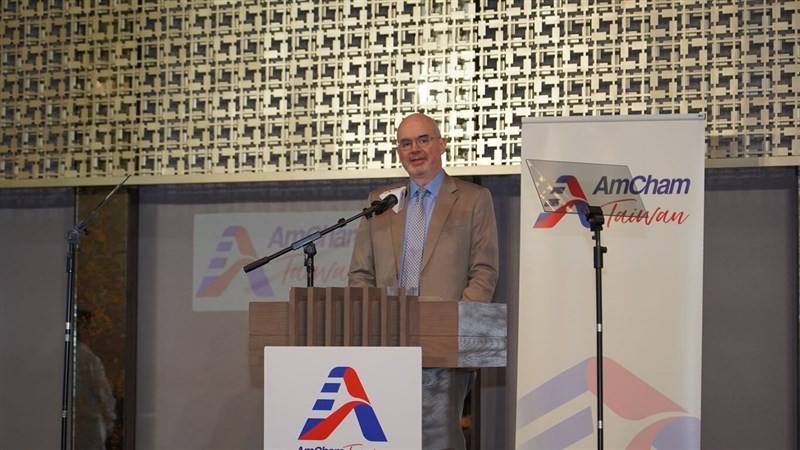 The United States representative to Taiwan Raymond Greene. CNA file photo
Update Date:
2025/12/11 Back